

Cynthia Calder
Director of Due Diligence
Phone: +1-302-426-2100
Email: cynthia@benchwalk.com
LinkedIn: Connect with Cynthia


Acquisition International (AI)
Global Excellence Award 2021
Most Innovative Legal Capital Solutions Provider - UK


As Bench Walk Advisors’ Director of Due Diligence, Cynthia Calder is responsible for managing our internal and external due diligence teams. She is also Of Counsel at Grant & Eisenhofer P.A. where she concentrates her practice in corporate governance and securities litigation. She has represented shareholders in such seminal cases in the Delaware Court of Chancery as UniSuper Ltd. v. News Corp., vindicating the shareholders’ right to vote; Carmody v. Toll Brothers, finding the dead-hand poison pill defensive measure was illegal under Delaware law; Jackson National Life Insurance Co. v. Kennedy, breaking new ground in the interpretation of fiduciary duties owed to preferred shareholders; Haft v. Dart Group Corp., resolving a contest for control of a significant public corporation; and Paramount Communications Inc. v. QVC Network, obtaining an injunction preventing the closing of a merger to force the board of directors to appropriately consider a competing bid for the corporation.
More recently, Ms. Calder prosecuted a derivative suit on behalf of American International Group, Inc. shareholders against the company’s former CEO, Maurice Greenberg, and other former AIG executives. The action concluded for a settlement of $115 million – one of the largest settlements in the history of the Delaware Court of Chancery. Ms. Calder was also the Court-appointed representative on the shareholder counsel’s committee in the United Health Group derivative litigation, which was settled for more than $900 million – the largest known derivative settlement in any court system. Ms. Calder also prosecuted a shareholder class action, In re ACS Shareholder Litigation, which resulted in one of the largest class recoveries in the history of the Delaware Court of Chancery.
Ms. Calder has co-authored numerous articles on corporate governance and securities litigation, including:
“Options Backdating from the Shareholders’ Perspective”
Wall Street Lawyer, Vol. 11, No. 3; “Securities Litigation Against Third Parties: Pre-Central Bank Aiders and Abettors Become Targeted Primary Defendants”
Securities Reform Act Litigation Reporter, Vol. 16, No. 2; and “Pleading Scienter After Enron: Has the World Really Changed?”
Securities Regulation & Law, Vol. 35, No. 45.
Ms. Calder graduated cum laude from the University of Delaware in 1987 and graduated from the Villanova University School of Law in 1991. Upon graduating from law school, Ms. Calder served as a judicial law clerk in the Delaware Court of Chancery to the Hon. Maurice A. Hartnett, III. Prior to joining Grant & Eisenhofer, Ms. Calder was an associate at Blank, Rome, Comisky & McCauley.
MARKET INDUSTRY UPDATES + ARTICLES




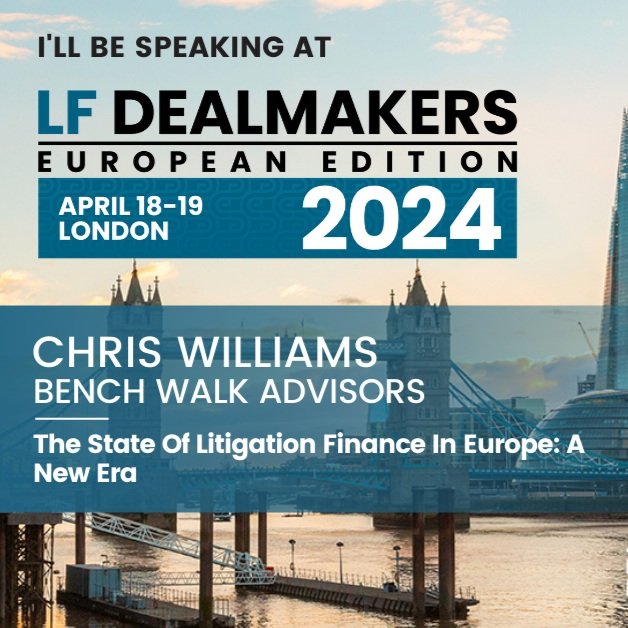
We’re delighted to announce that we are sponsoring the much-anticipated LF Dealmakers, European Edition.
Next month, Istanbul Arbitration Week will kick off its second year. Lawdragon chatted with one of the main organizers of the conference, Ayse Yazir, about the topics, panelists and special events taking place at ISTAW this year.

Ayse Yazir’s early career in insurance taught her how to spot a good investment. Now, as a litigation funder, she sorts through securities cases, class actions and more that come to her from across the globe, searching for the cases her firm’s funding can make into headline successes.




Adrian Chopin chosen at ‘Litigation Funding Adviser of the year’ 2022, by Lawyer Monthly



Istanbul Arbitration Week kicks off next week, running October 10 to 14. This is the second year for the event, hosted by the Energy Disputes Arbitration Center, or EDAC. Topics include collecting on claims, ADR mechanisms, the Energy Charter Treaty, litigation funding and other subjects pertinent to arbitration.
You were awarded the Turkish National State Scholarship to study Turkish Law at Başkent University and studied English Law at Nottingham Law School, England. Tell us about your experiences studying in two separate countries and what made you decide to become a lawyer…..

Stuart Grant, known internationally for his plaintiff advocacy work on behalf of stockholders, co-founded Bench Walk Advisors in 2017. The company has since invested nearly half a billion dollars into over 150 commercial cases and portfolios. They have offices in New York, Delaware and London.

Bench Walk are proud to announce that four of our team members have been named as industry leaders in the 2022 Lawdragon Global Litigation Finance Guide.
We are proud to introduce the 2022 class of the Lawdragon Hall of Fame. Among them are the nation’s greatest corporate litigators, plaintiff powerhouses, innovators who established new areas of law practice and individuals whose dedication to a sometimes precarious legal system are unsurpassed.

Kosovo has made significant efforts toward building a successful legal framework for protecting foreign
investments. Kosovo became a party to the International Centre for Settlement of Investment Disputes
(“ICSID”) convention in 2009; has passed a number of domestic laws and regulations promoting foreign
investments; has signed and ratified various bilateral investment treaties (“BIT”); and has passed a
domestic arbitration law that is largely based on the UNCITRAL Model Law. In little more than a decade
of state-building, Kosovo has clearly recognized the importance of foreign direct investments for
developing its emerging economy.

What does the future hold for investment protection in Europe? A colossal question that resonates across board rooms and government halls on both sides of the Channel. With a consortium of investment law experts including Nikos Lavranos (NL Investment Consulting), Ayse Lowe (Bench Walk), Gordon Nardell QC (Twenty Essex), and Laura Rees-Evans (Fietta LLP) joining together, the webinar held on 30 June 2021 provided multi-disciplinary viewpoints that will be of interest to both investors and States alike.
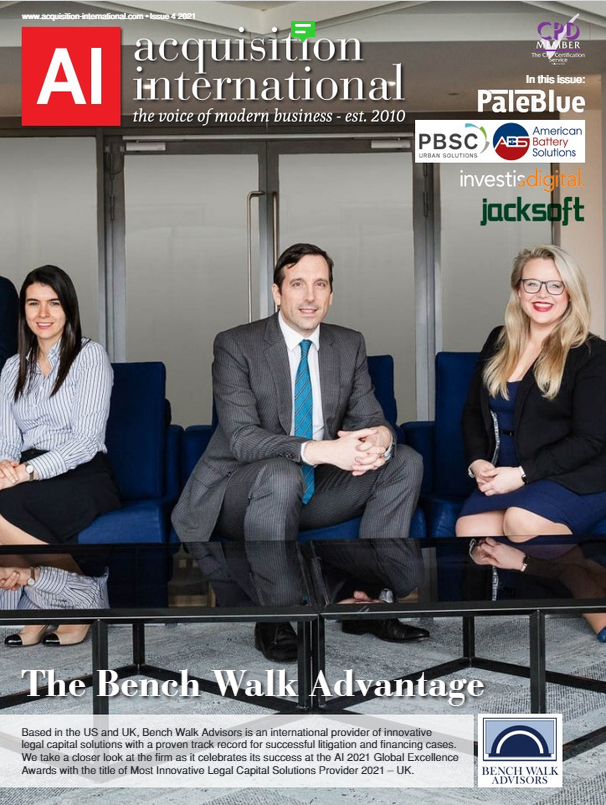
Massive congratulations to our UK Team for winning Acquisition International Magazine's ‘Most Innovative Legal Capital Solutions Provider’ award.

In my prior blogs I examined “implied probability of loss” as a way of analysing the risk and price of transactions in the litigation funding market.
Let’s take for example (and with all the usual caveats about being reductive) a funder that determines that a case has, say, a 2/3 chance of winning and generating for both the claimant and the funder lots of money, and a 1/3 chance of losing with an attendant destruction of the funder’s entire investment. When pricing this case that funder must charge, on a win, $1.5 for every $1 invested just to break even. This is because the funder has a 1 in 3 chance of losing 100% and a 2/3 chance of winning 150%, which yields, on average, 100% (that is, a mere return of the funder’s investment).

Considering the importance of English Courts in international commercial litigations and arbitrations, there are significant develop- ments each year. While some of these decisions are welcomed among scholars and practitioners, some of them are highly criticised. This paper reviews some of the most critical arbitration-related decisions from the English Courts in 2019. These cases illustrate the pragmatic nature and pro-arbitration stance of the English Courts.


Congratulations to Co-founder and Managing Director, Stuart Grant, on being recognised in Lawdragon's inaugural guide dedicated to the role of legal finance in law firms worldwide, which brings together pioneers of litigation finance, who’ve helped build this field for decades alongside young stars bringing technological tools to better funding assessment and results.

Dispute Resolution analysis: Ayse Lowe, director at Bench Walk Advisors, details the benefits of litigation funding to in-house counsel and advises on funding portfolios. Interviewed for Lexis Nexis by Halima Dikko.

Litigation funding has typically focused on claimant side investment. Defence funding feels less valuable because it does not so obviously unlock an asset. In addition, the cash benefit of having a funder pay defence legal costs will often be dwarfed by the potential cash payout by the defendant on a loss. And finally, a defendant worth suing is usually not cash constrained in the same way as many claimants who seek funding. But as the funding market has matured, some funders, defence lawyers and their clients have begun to express interest in defence funding.

Litigation funding has typically focused on claimant side investment. Defence funding feels less valuable because it does not so obviously unlock an asset. In addition, the cash benefit of having a funder pay defence legal costs will often be dwarfed by the potential cash payout by the defendant on a loss. And finally, a defendant worth suing is usually not cash constrained in the same way as many claimants who seek funding. But as the funding market has matured, some funders, defence lawyers and their clients have begun to express interest in defence funding.
Bench Walk Advisors is proud to have financed this claim and to have helped facilitate a great outcome for the plaintiffs. On behalf of everyone at Bench Walk, our warmest congratulations to all involved.